Off-grid · Kodaikanal · Tamil Nadu

Earthship
Karuna.

A hand-built, fully off-grid sanctuary above the Kodaikanal hills. Solar power, spring water, 32-foot vaulted ceilings — set inside 25 acres of forest, waterfalls and mountain views.

4 Guests
2 Bedrooms
25 ac. Private land
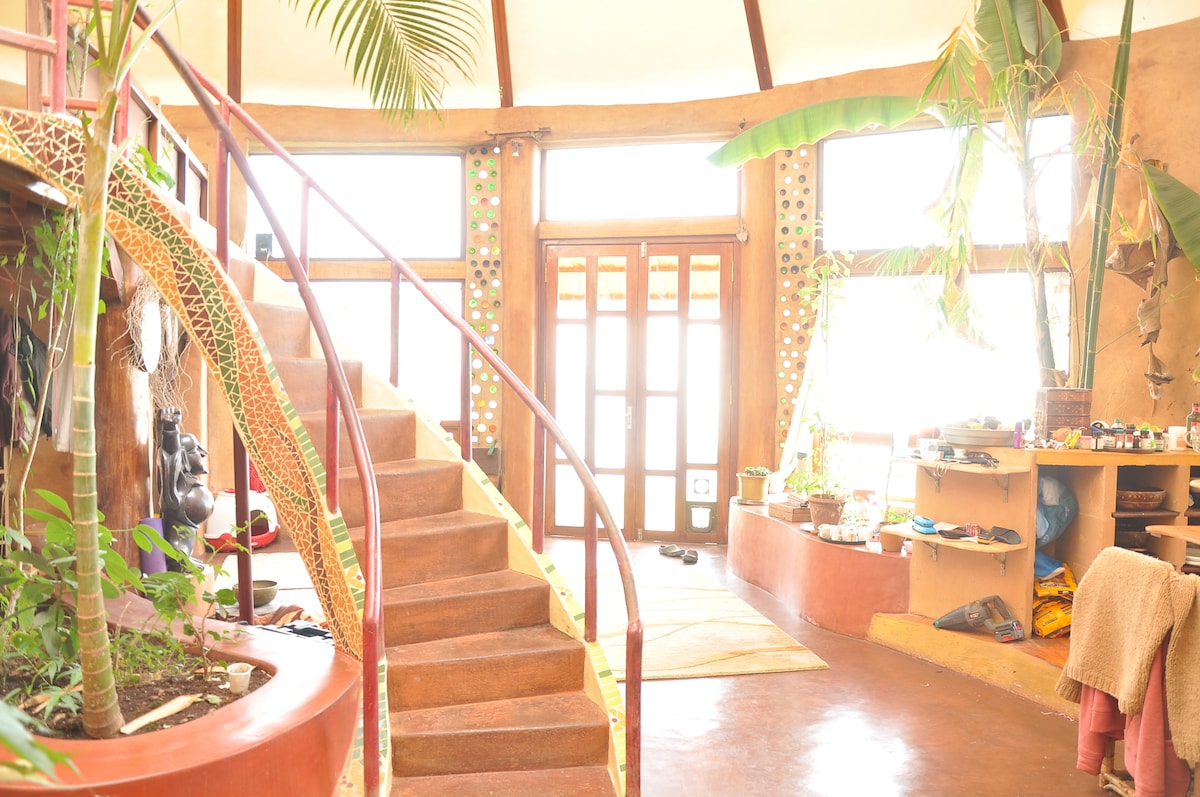
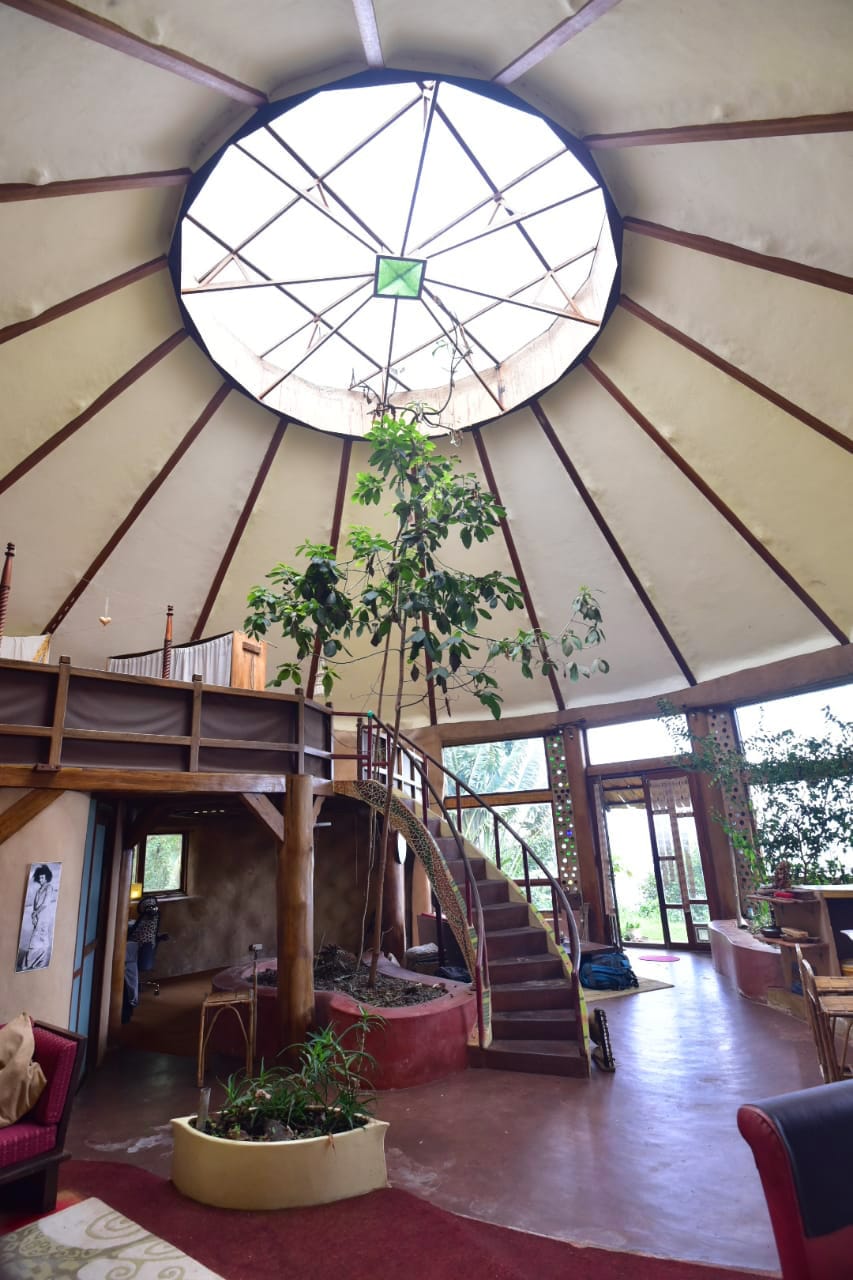
Interior view of the earthship — circular skylight, 32-foot vaulted ceiling, spiral staircase and a living tree growing indoors
Hand-sculpted from earth, tyres & sunlight
11yrs hosting
00 · The Film

Watch from above the clouds.

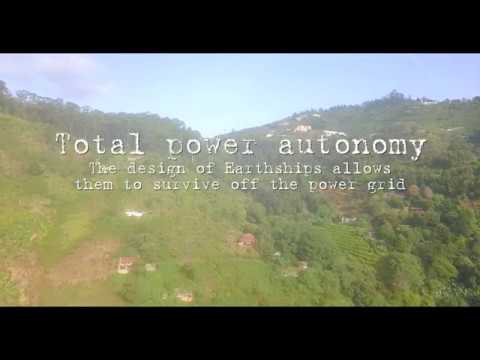
Drone footage of the earthship, the land and the valley it sits above — filmed on the day we opened after the 2025 refinish.

Aerial view of Earthship Karuna — drone shot of the round hand-built home against the mountains above Kodaikanal

Why We Need An Off Grid Lifestyle — Drone Footage Of Earthship Karuna. A short by Sai Ram with Alex.

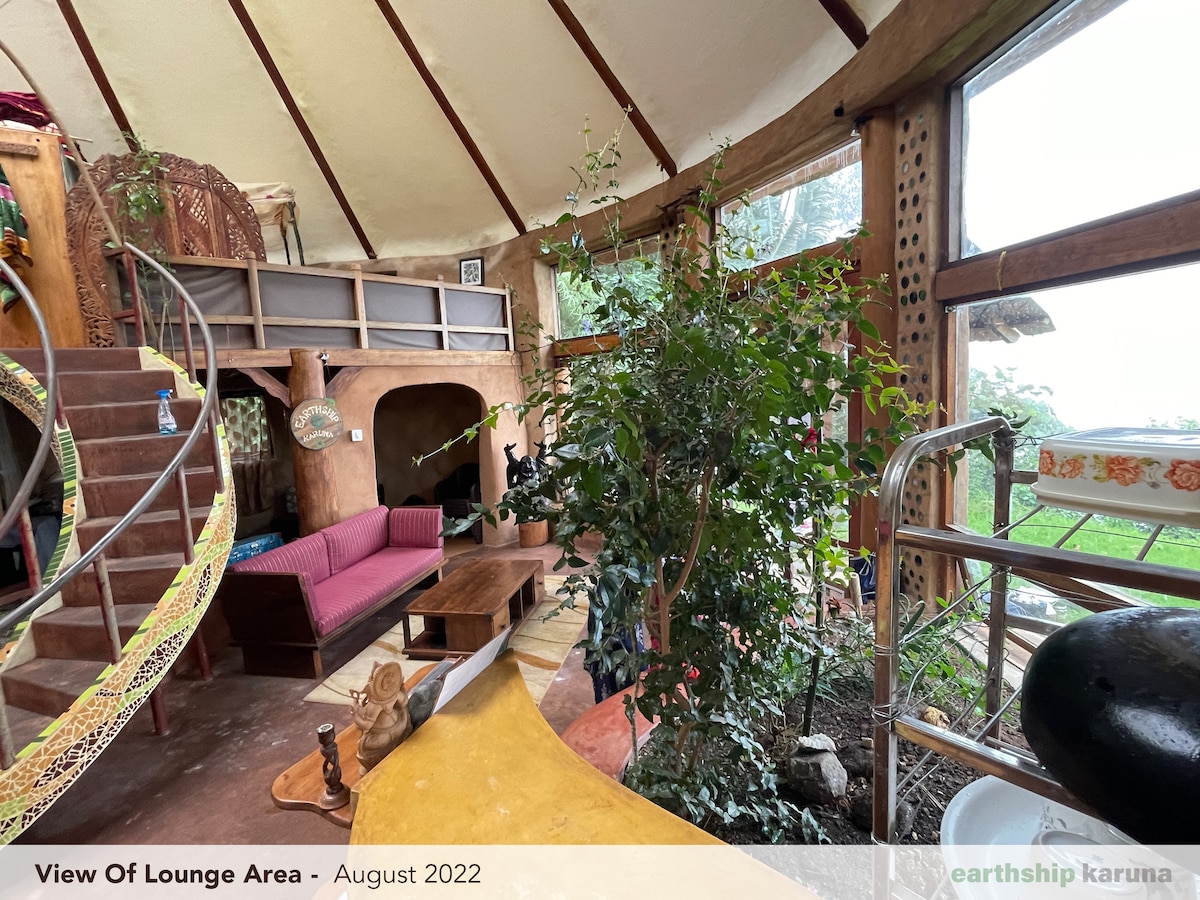
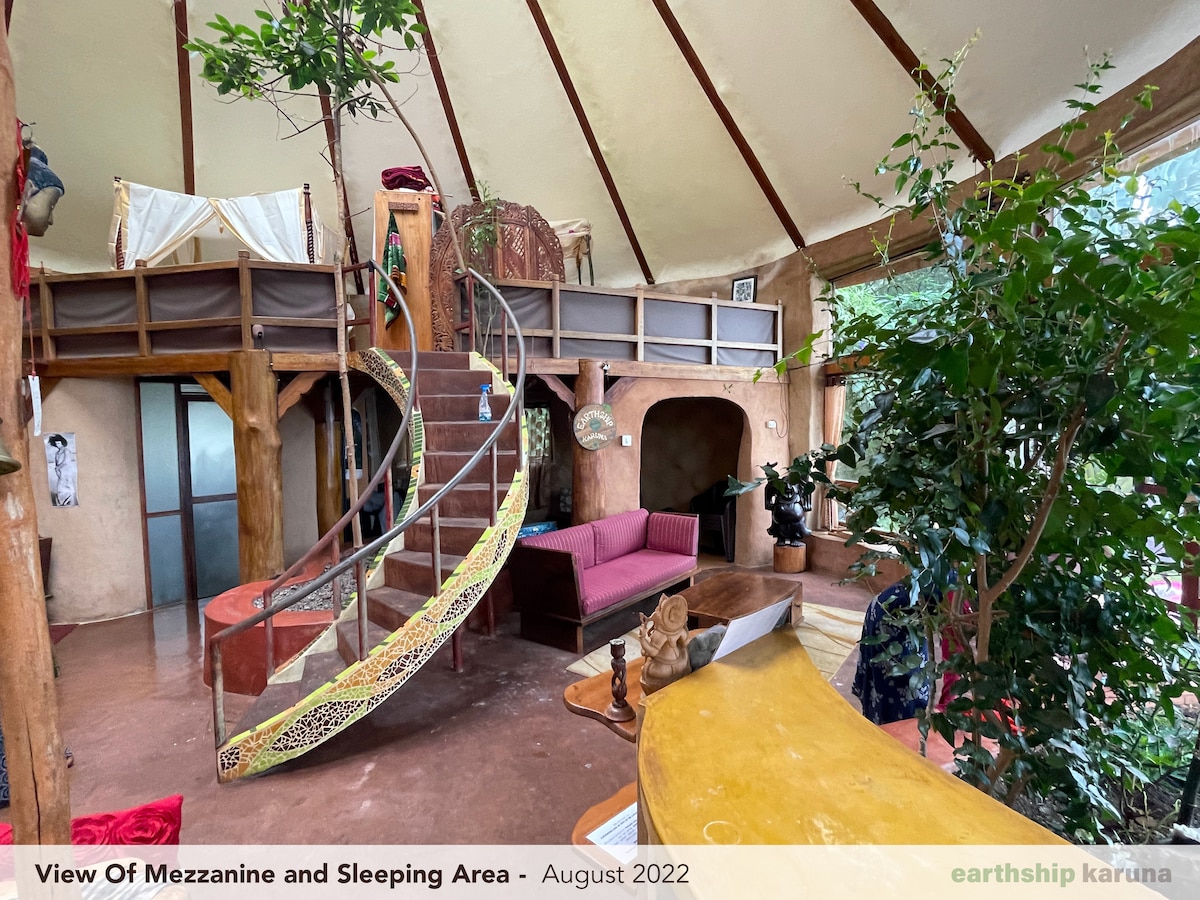
Wide view of the living space — mezzanine sleeping loft, hand-sculpted spiral staircase and indoor tree
The vaulted living space & mezzanine loft.
01 · The Story

A home built by hand, powered by sun, surrounded by forest.

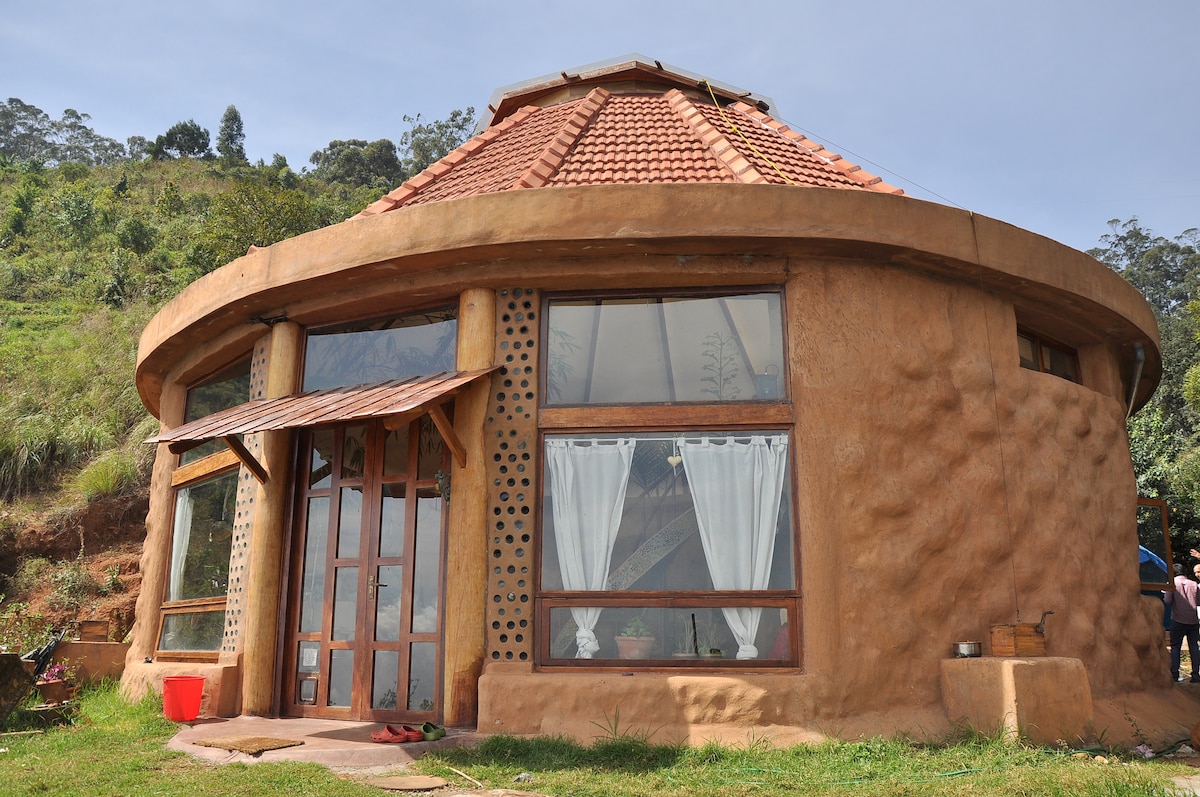
Earthship Karuna is mainland India's first earthship — a self-sufficient, passive-solar home built from rammed-earth tyres, glass bottles, lime-plaster and timber by Alex Leeor and a small crew of artists, masons and apprentices. It was completed in 2012 and freshly refinished in March 2025.

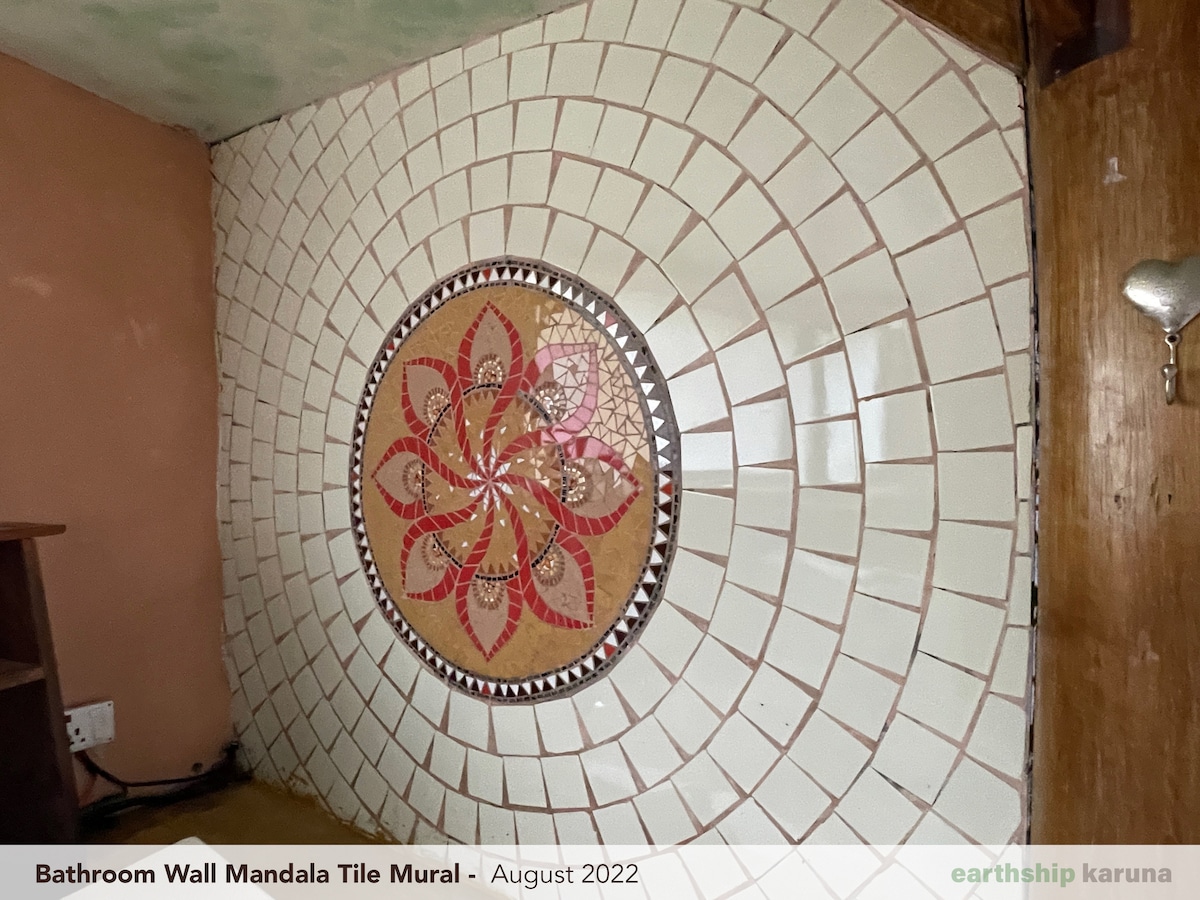
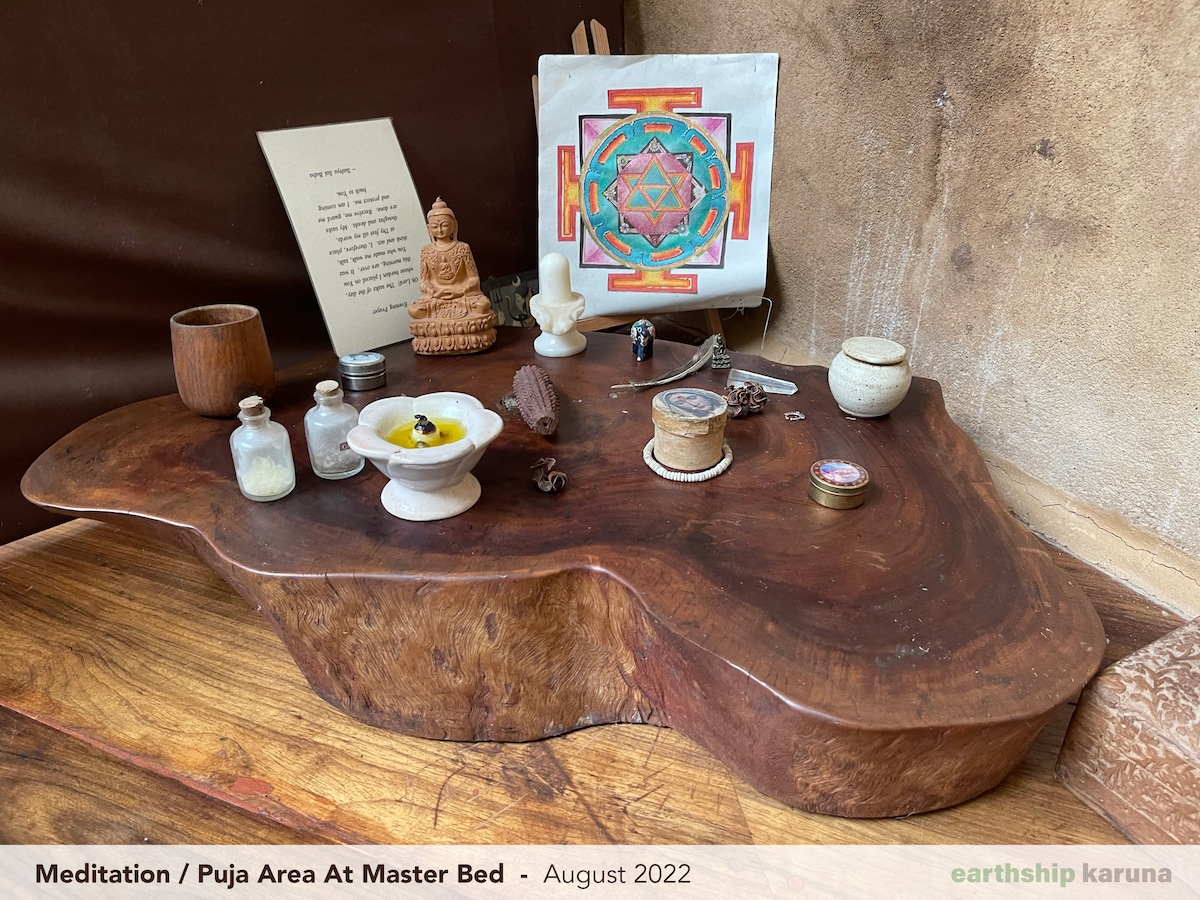
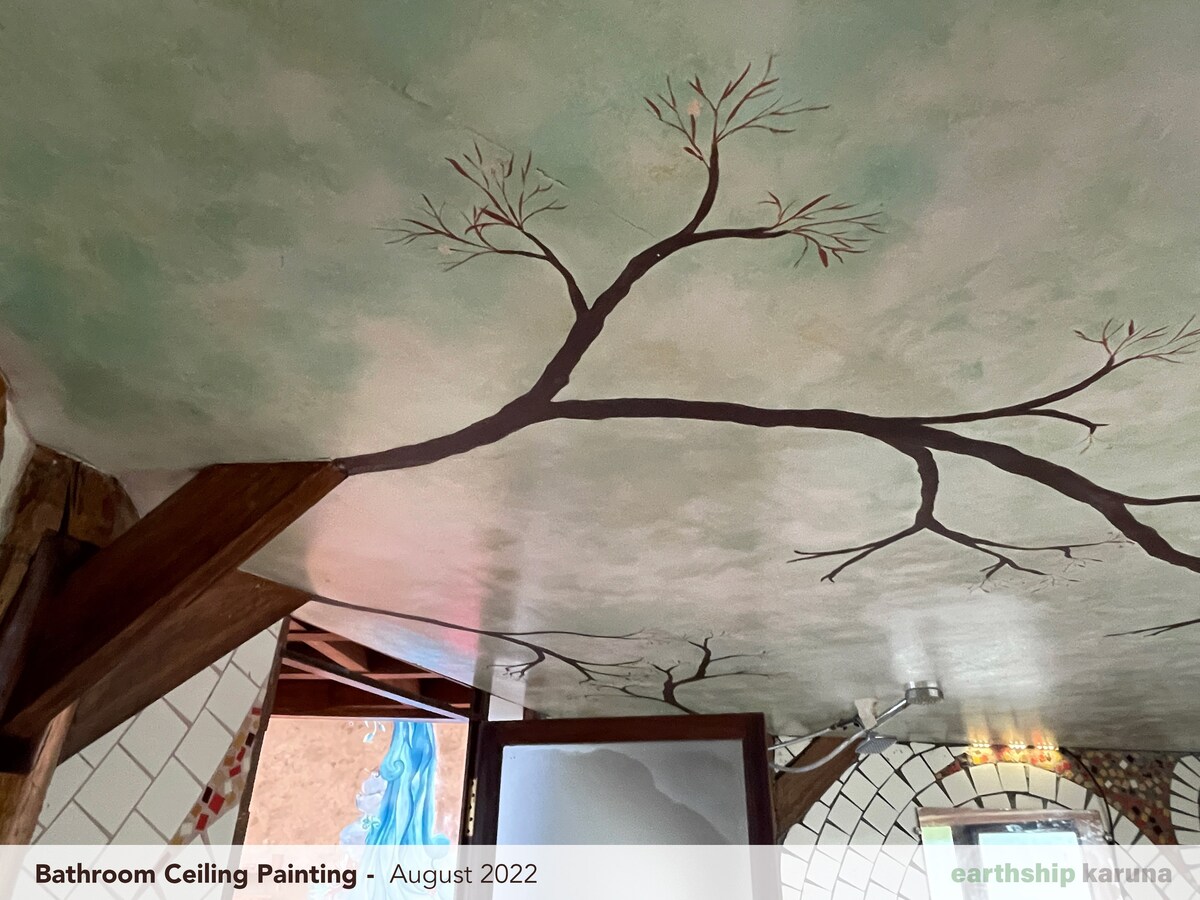
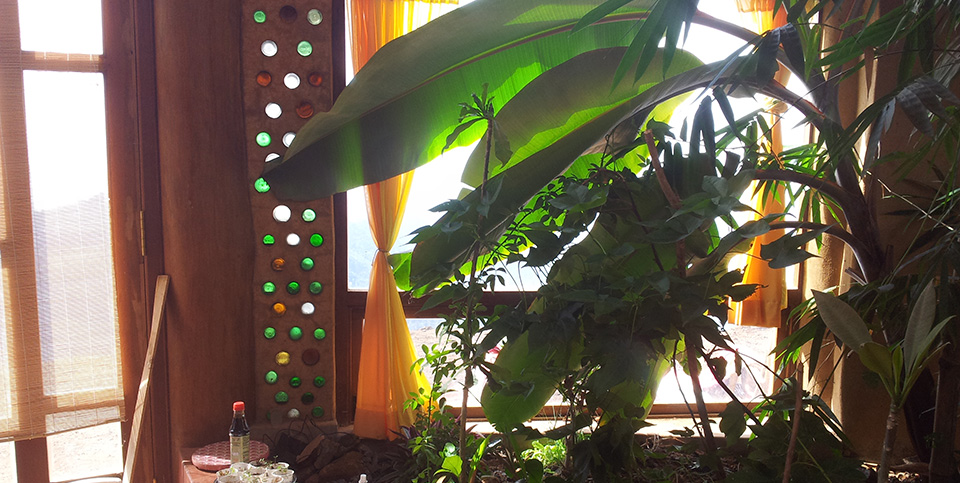
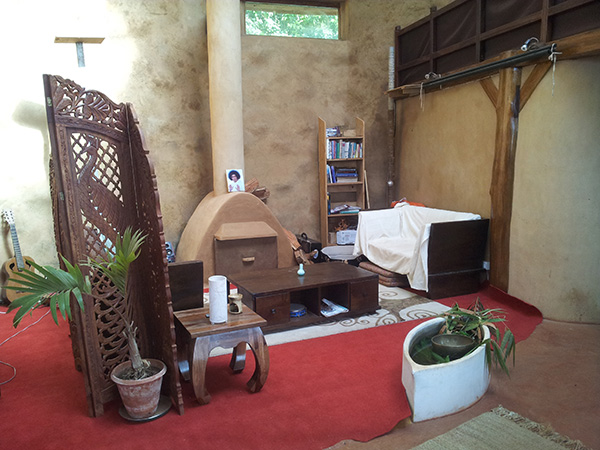
Inside the 1,200 sq ft round building, a spiral staircase climbs to a sleeping loft beneath cathedral-like vaulted ceilings. Hand-painted murals soften the bathrooms. Living plants and small trees grow indoors. The acoustics — once you put on music — are unforgettable.

It exists to prove a single point: off-grid living can be more luxurious, not less.
03 · How it Works

Off-grid without compromise.

Everything that lights, warms, fills and powers the home comes from the land it sits on. None of it asks you to rough it.

New solar array

A freshly upgraded solar system runs the home year-round. A backup generator exists, but it rarely turns on.

Spring water

All water is drawn from a local mountain spring and nano-filtered at the kitchen tap — clean enough to drink straight.

30 Mbps Wi-Fi

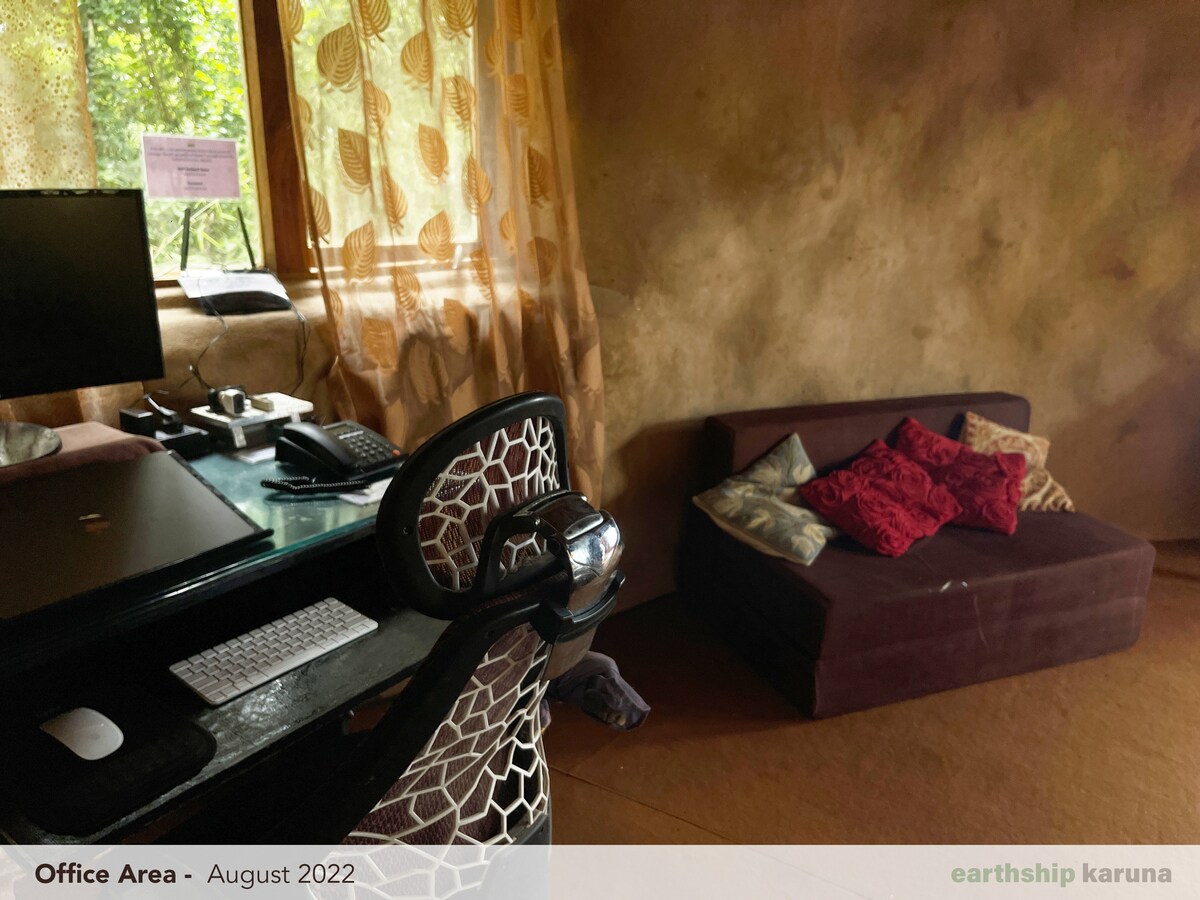
Unlimited fibre Wi-Fi reaches every corner. There's a proper desk, chair and quiet workspace for remote workers.

Hand-built interiors

Sculpted earth walls, hand-painted murals, a sweeping spiral staircase — finished by Alex and a rotating crew of international artists.

Full kitchen

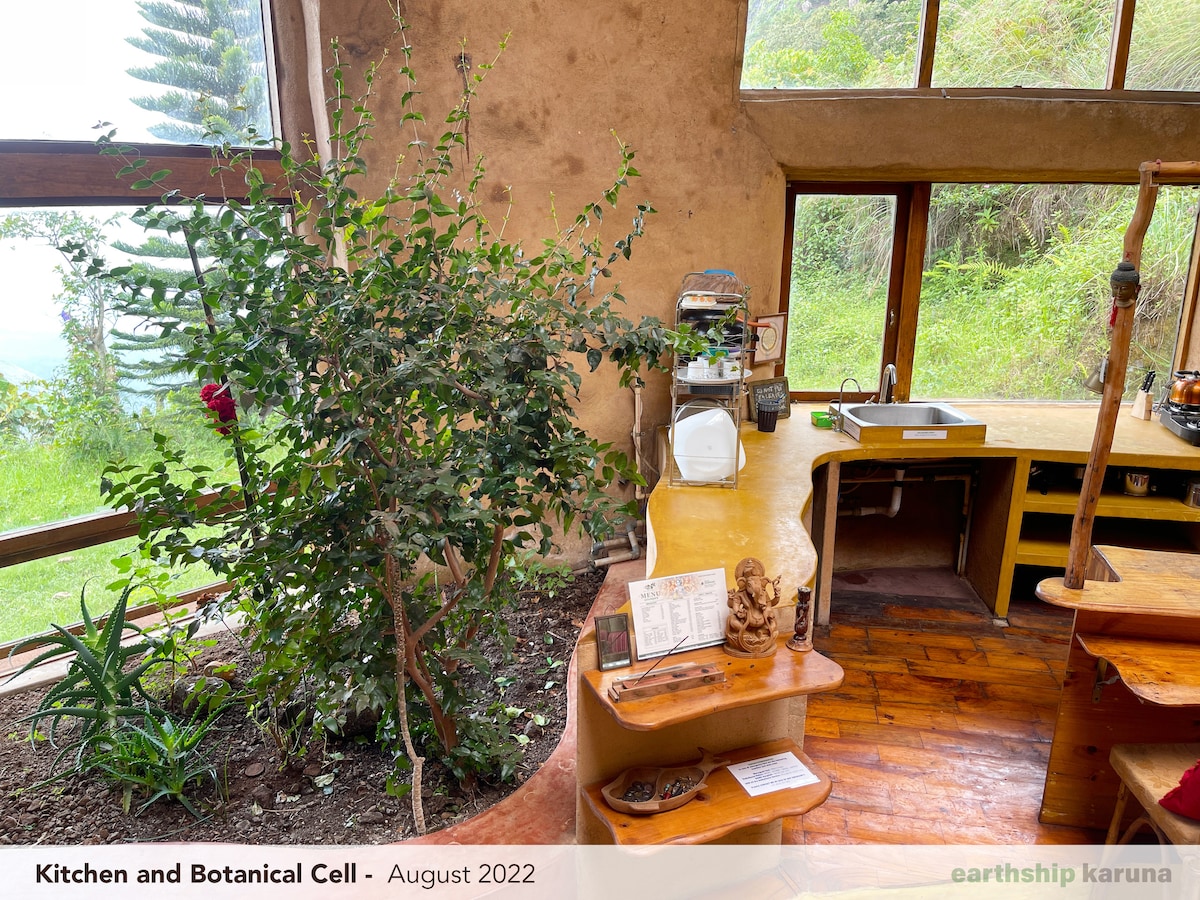
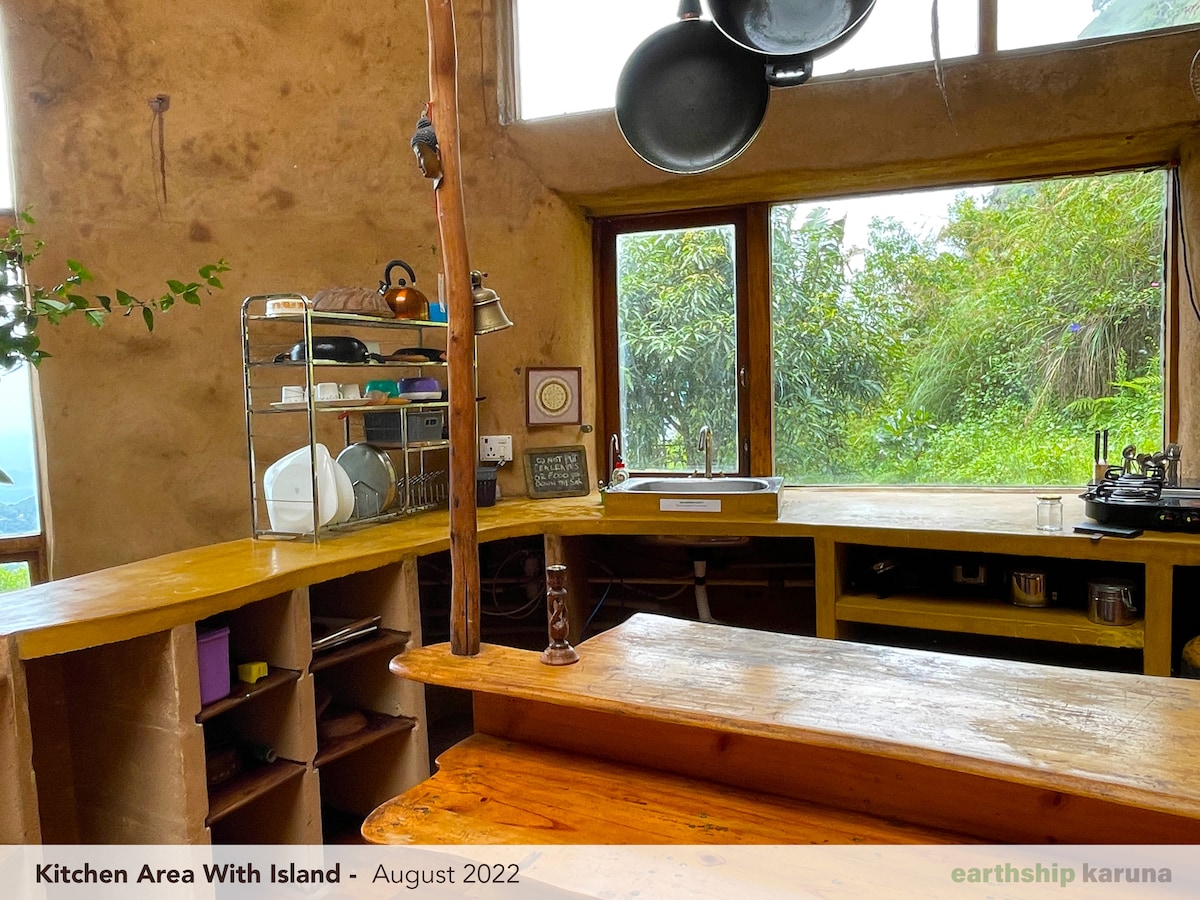
Pots, pans, fridge-freezer, gas hob, everything you need to cook. Bring your own provisions — shops are far.

Self check-in

A keypad entry means you can arrive on your own schedule (latest 4:30pm — staff finish at 6).

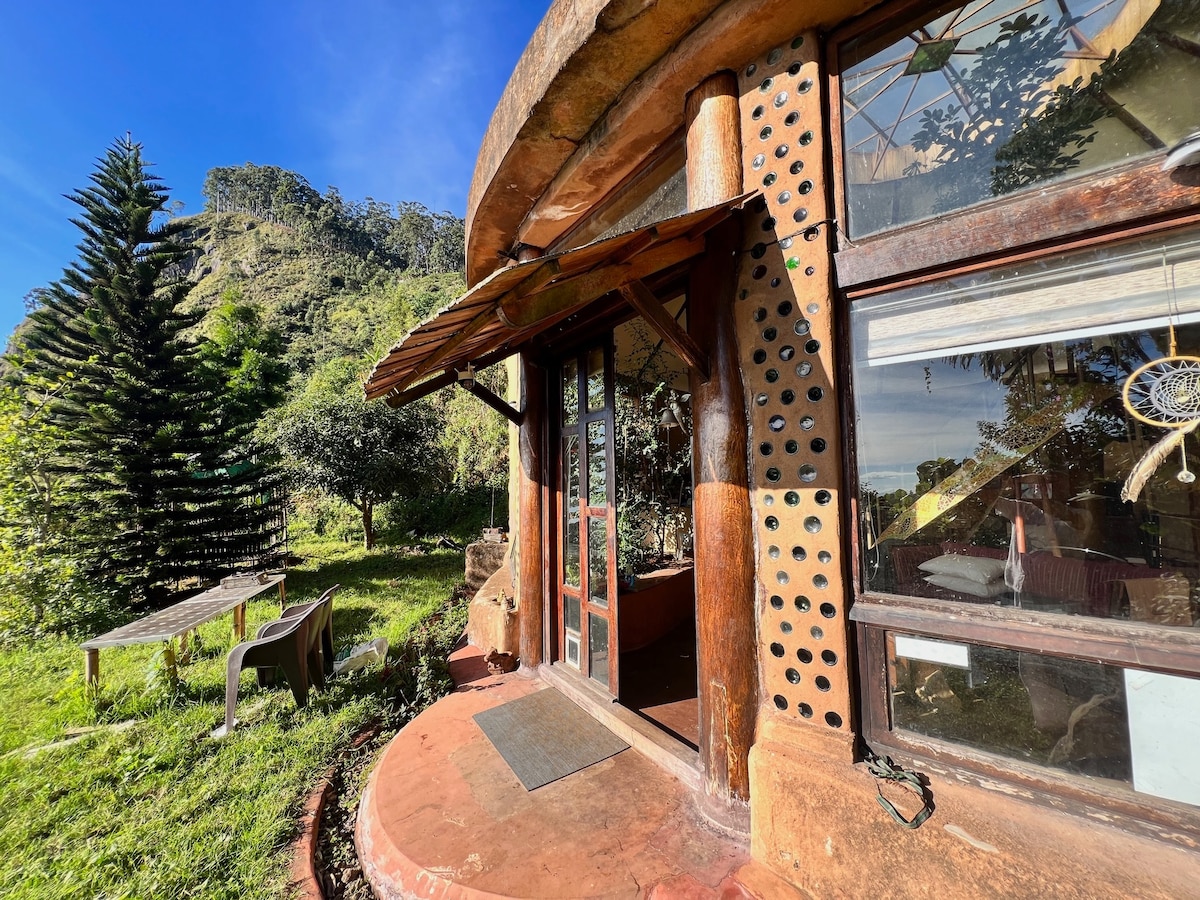
The round earthship set into the hillside, framed by mountains and forest
04 · The Land

Inside Karuna Dham — 25 acres of mountain & forest.

The earthship sits within Karuna Dham — a yoga retreat and self-sustaining off-grid community in the hills above Kodaikanal. For over two decades, they've grown their own food, built homes from earth and local wood, and drawn power from sun and river. The land borders a wildlife sanctuary; trails leave the doorstep in every direction.

Setting
1,200 sq ft round home set into the hillside, 30 minutes from Kodaikanal town.
On the land
Waterfalls, streams, natural pools, forest trails, panoramic valley views.
Nearby
Govinda's vegetarian restaurant beside a waterfall — eat in or have dinner delivered.
Getting here
Final approach is by jeep with Satish, our trusted driver — the forest department doesn't permit other vehicles on the last stretch.
05 · The Concept

What's an earthship?

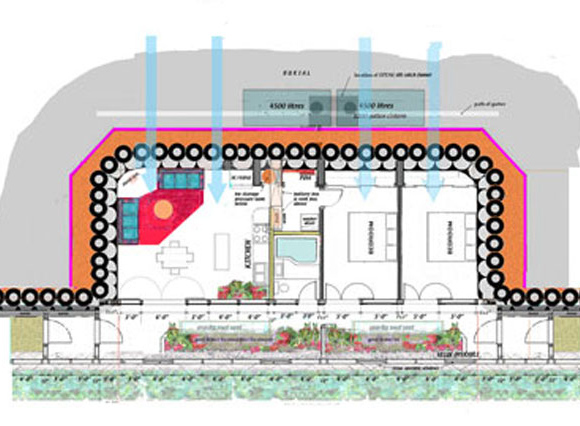
An earthship is a passive-solar building that heats and cools itself, generates its own power, harvests its own water, and treats its own waste. With free energy from the sun and free materials from waste, it's based on earth-rammed tyre walls that store thermal mass like a battery — releasing warmth at night, staying cool through the heat of day.

It's a holistic model. At its simplest and most powerful, it lets people re-integrate with nature through their homes — where a conventional house only encourages more dis-integration.

Cross-section diagram of an earthship showing thermal mass tyre walls, water catch, planters and passive-solar design
A cross-section of the earthship concept — thermal mass walls, passive solar, greywater planters, water catch.
i.

Thermal mass

Earth-rammed tyres form massive walls that soak up heat during the day and radiate it back at night — no heating or cooling needed. The building is the battery.

ii.

Solar & wind

Photovoltaic panels (and, where needed, wind) provide all the electricity. The home is sized to run comfortably off its own power, year-round.

iii.

Water harvesting

Rain and snowmelt are caught off the roof, stored in cisterns, filtered and used — then reused as greywater through indoor planters before going back to the land.

iv.

Waste & food

Sewage is treated on-site with simple natural systems. Indoor planters grow food year-round. Nothing leaves the site that the site can't absorb.

06 · The Build

Three years. By hand.
2009 → 2012.

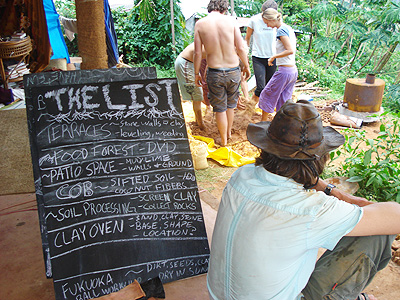
Every tyre rammed. Every wall plastered. Every beam raised — by Alex and a small rotating crew of volunteers, masons and artists. Here's how Earthship Karuna went from a patch of red earth to the home it is today.

2009

Breaking ground.

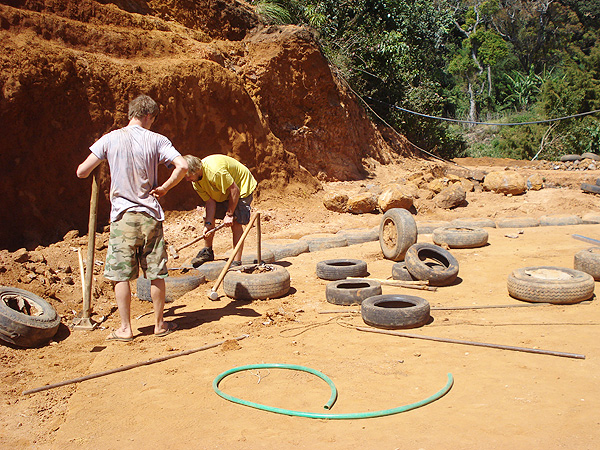
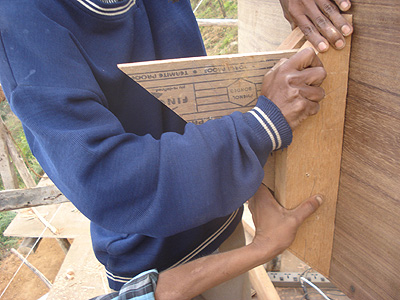
A patch of red earth, a pile of old tyres, a small crew in flip-flops. The first rammed-earth tyres went down after months of site prep, hauling tyres up the mountain, and sourcing local materials. Two guys with sledgehammers against 800 tyres of work.

Two builders ramming the first tyres in January 2009 — red earth, jungle hillside behind them

Walls begin to rise.

The first courses of tyre walls took shape. Each tyre packed with earth, pounded tight, stacked and staggered like rammed-earth bricks. Slow, heavy, rhythmic work — and the first sign that the shape of a house was coming out of the ground.

Early tyre walls under construction, April 2009

12 courses, a mezzanine, and planters.

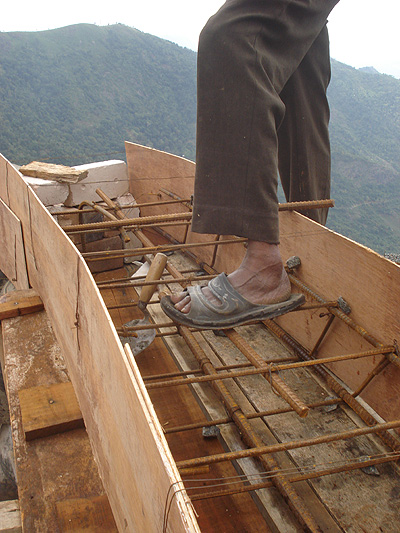
By month-end we hit the 12th course of tyres — walls strong and stable. Cement filled the voids to reduce wobble on our unusually tall walls. Rebar lintels went in above the window frames. Kaila Binney, a permaculture teacher from the USA, joined us and laid out the interior greywater planters — three linked planters running the full circumference, all gravity-fed.

Tyre walls in May 2009 with mezzanine wooden frame going in

Lintels, mezzanine beams, and the press.

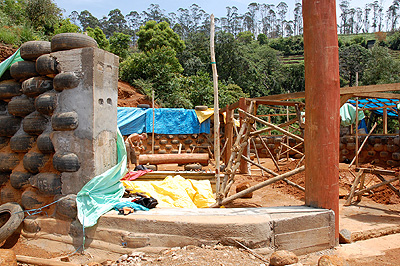
The concrete lintels were finished — the largest pieces of 18mm steel rebar bridging all three main windows and pinning the walls together. Major mezzanine beams and pillars went up. DNA Newspaper ran a full-page feature (Bombay, Pune & Mumbai editions). Two architecture magazines followed. We started forming the 13-foot, 16-sided centre ring for the roof.

Concrete lintel and mezzanine beams, June 2009
2010

Testing the roof.

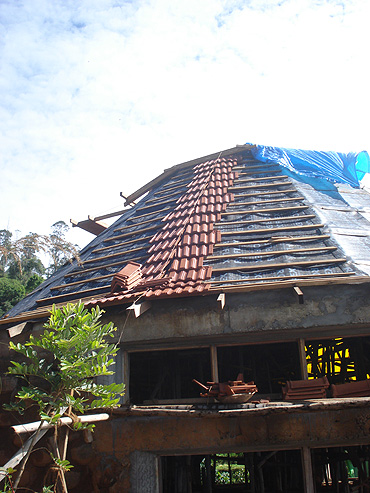
Terracotta tiles laid out and trial-fitted. Because the roof beams didn't overlap the entire wall, we designed extensions that changed the angle around the edge — a detail that ended up being beautiful as well as functional. EDPM waterproof barrier would follow.

Roof tile test-fitting, February 2010

The roof takes shape.

With the walls locked in and the structural timber in place, we pushed on with the roof itself — beam work, sheathing, waterproofing. The round building was finally reading as a building from every angle.

Roof structure in progress, July 2010

Teak cap & plexiglass.

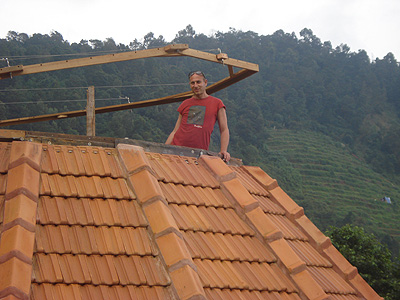
Time to fit the cap of the roof — an opening skylight framed in 100-year-old reclaimed teak, covered with plexiglass (thin, light, practically indestructible). First night sleeping under that circular sky-view: unforgettable.

Alex on top of the nearly-finished terracotta roof, October 2010
2011

More work than I could have imagined.

A huge push between March and year-end. The roof opening mechanism was reinvented with three gas springs (over 250kg of pushing force, hidden inside) — way bigger than a standard hopper but now easy to operate with a hand-cranked winch. Waterproof even with the cap open. Mezzanine flooring finished. Homemade front door fitted. Spiral staircase ready. Ferrocement guttering done. A 200-litre solar hot water tank and the 1kW solar PV + 2kW inverter + 48V battery bank all arrived.

Major progress shot from the 2011 push — interior coming together
2012

The dream becomes real.

Finishing continued through 2012 — interior plastering, the hand-painted murals in the bathrooms, the mosaic staircase, the planters filled with living trees. It was hard to believe, but the earthship was looking stunning. Move-in was close.

Interior of Earthship Karuna in July 2012 — finished, furnished, ready to live in
07 · Build Your Own

Commission an earthship with Alex.

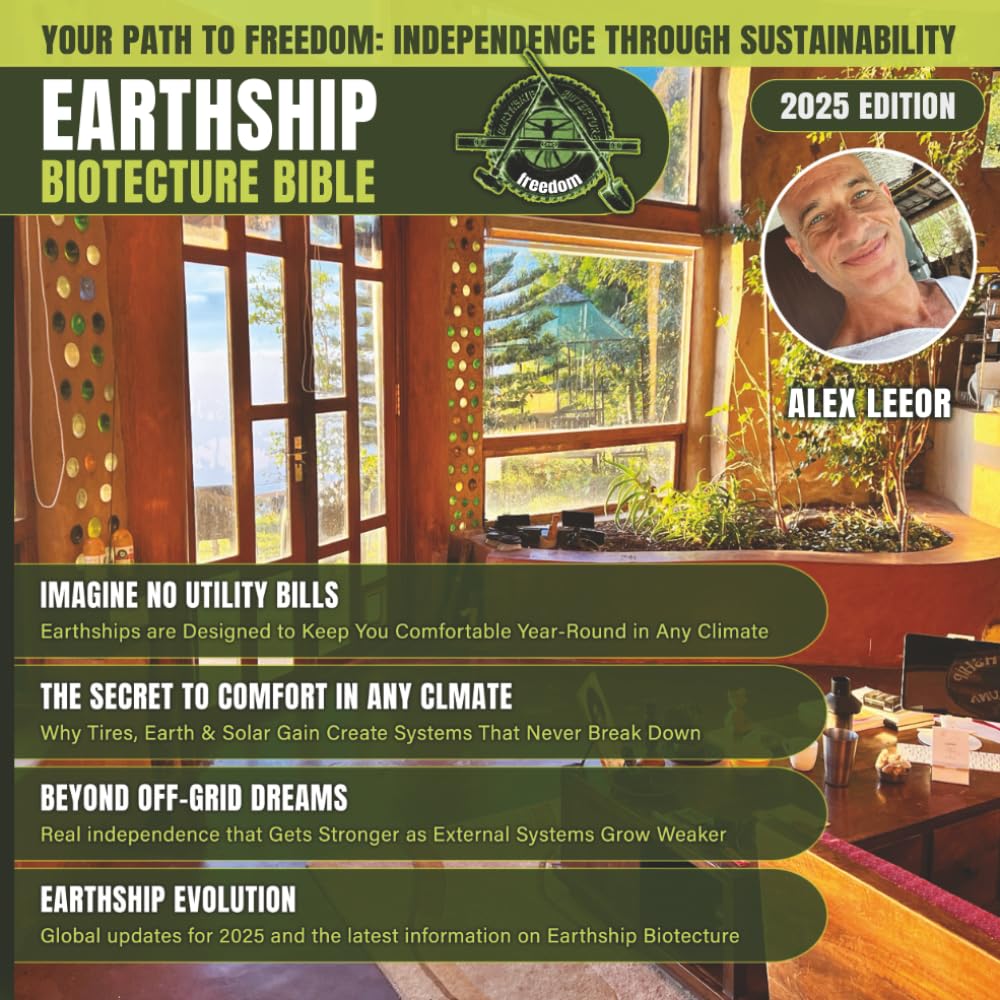
After 15 years designing and building off-grid homes, Alex now offers bespoke Earthship Biotecture consultations — anywhere in the world. Every earthship is tailored to its site: climate, soil, materials, regulations, lifestyle.

Not off-the-shelf

Not traditional architecture, not a catalogue plan. Every concept is drawn from your site's own climate, soil, materials and regulations — an integrated regenerative system, not a pretty building.

Paid consultation

Serious analysis requires serious work. Consultation cost varies with project complexity, site challenges and scope — the assessment form is how we can quote accurately.

Site-specific by default

Weather patterns, soil conditions, material availability, regulatory landscape — every variable is analysed so what we design actually works on your piece of land, wherever it is.

No commitment

Filling out the form creates zero obligation. It just gives us what we need to send back consultation options, pricing and some preliminary insight into your project.

What happens next

You complete the comprehensive site assessment form.

We analyse your project's complexity and requirements.

You receive consultation options and pricing, usually within a few days.

You decide whether you'd like to proceed — no pressure either way.

Start the assessment

The form is long on purpose — earthships are integrated living systems, not catalogue homes. Your progress is saved automatically as you type; come back on the same device and pick up where you left off.

08 · Go Deeper

Read the book. Try the tools.

Two decades of building earthships on three continents, distilled — one as a book to read by the fire, the other as an AI-powered design companion you can talk to any time.

09 · From Guests
4.85
40 reviews · 90% five-star
Location5.0
Communication5.0
Check-in4.9
Accuracy4.8
Value4.7
Cleanliness4.6

It's truly off-the-grid, which naturally pushes you to spend quality time with friends and family instead of being on screens. There's a waterfall nearby and a beautiful cliff view that adds to the experience.

Gopal, Airbnb guest Gopal November 2025 · Airbnb ★★★★★

Such a beautiful house, and the architecture offered a unique experience. We loved the mezzanine floor and the kitchen. An off-grid stay with a unique experience — we had a peaceful time.

Prasanna, Airbnb guest Prasanna October 2025 · Airbnb ★★★★★

The feeling of living on this beautiful property cannot be described through words. You have to be physically there to feel the HEAVEN. You might not find anything more beautiful and peaceful in Kodai.

Adarsh, Airbnb guest Adarsh March 2022 · Airbnb ★★★★★

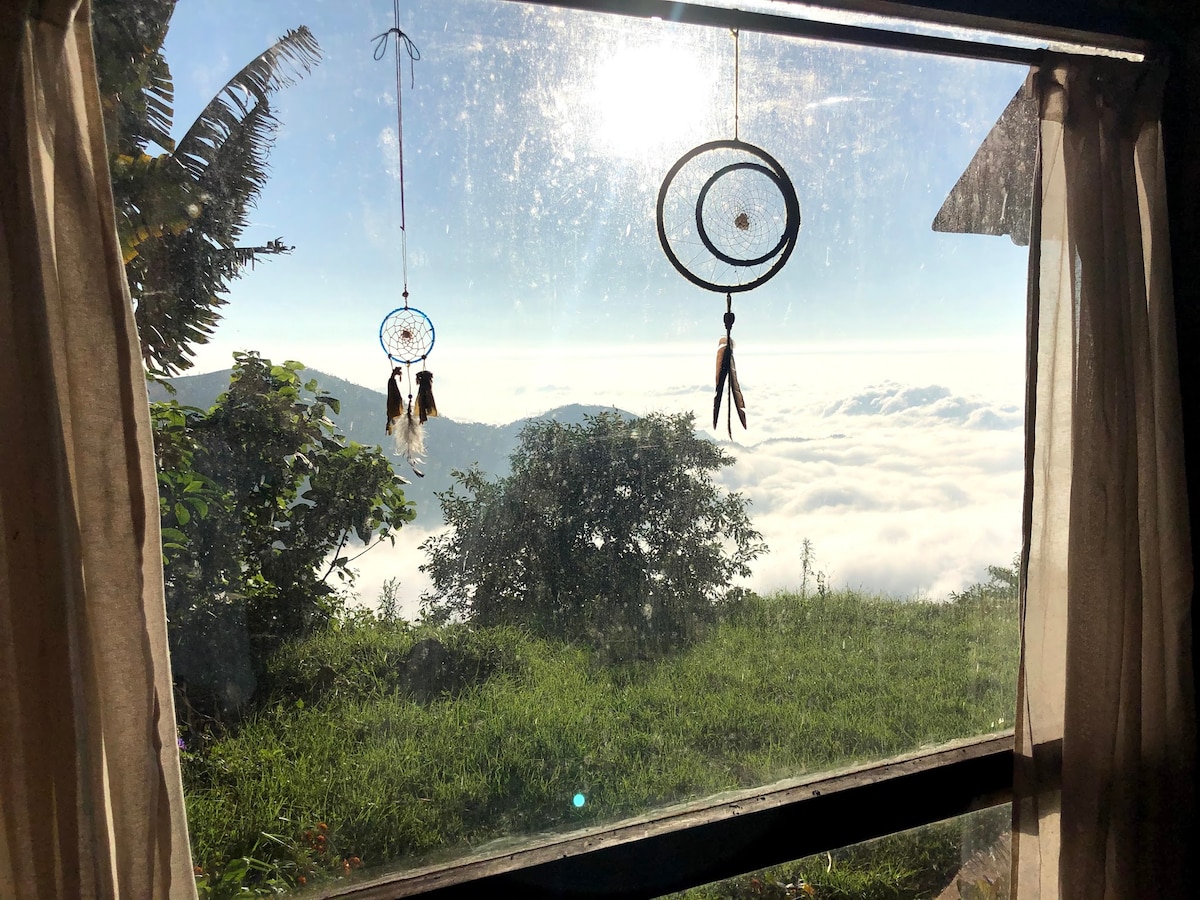
Great views, unique building done very artistically, living in commune with nature, beautiful sunrises and stargazing at night — a very memorable experience for us.

Usha, Airbnb guest Usha April 2021 · Airbnb ★★★★★

Earthship Karuna is perfect for anyone who wishes to go off-grid and be ONE with nature. The view right outside Earthship's doorstep will leave you breathless.

Aakash, Airbnb guest Aakash March 2022 · Airbnb ★★★★★

Our stay at the Earthship was surreal. The house offers unparalleled views on the valley and complete privacy. This is an experience not to be missed at any cost.

Ankit, Airbnb guest Ankit April 2021 · Airbnb ★★★★★
Alex Leeor, host and builder of Earthship Karuna
10 · Your Host
I built Earthship Karuna to show that off-grid living can be more luxurious, not less. Twelve years on, every guest who arrives reminds me why.
Alex Leeor Eco-builder · 11 years hosting · Responds within an hour
11 · Plan Your Stay

The practical bits.

A few things worth knowing before you book — Karuna is gorgeous, but it's not a hotel.

Capacity & layout

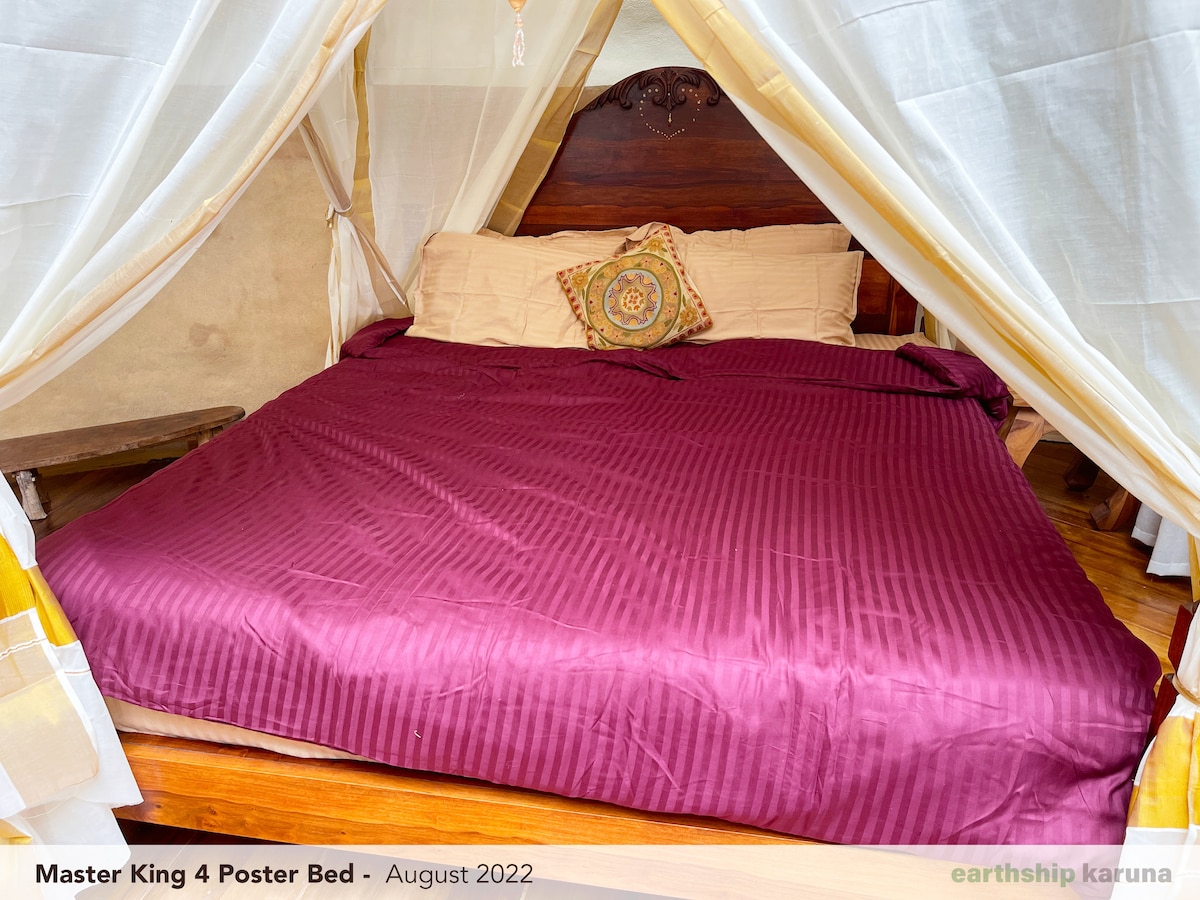
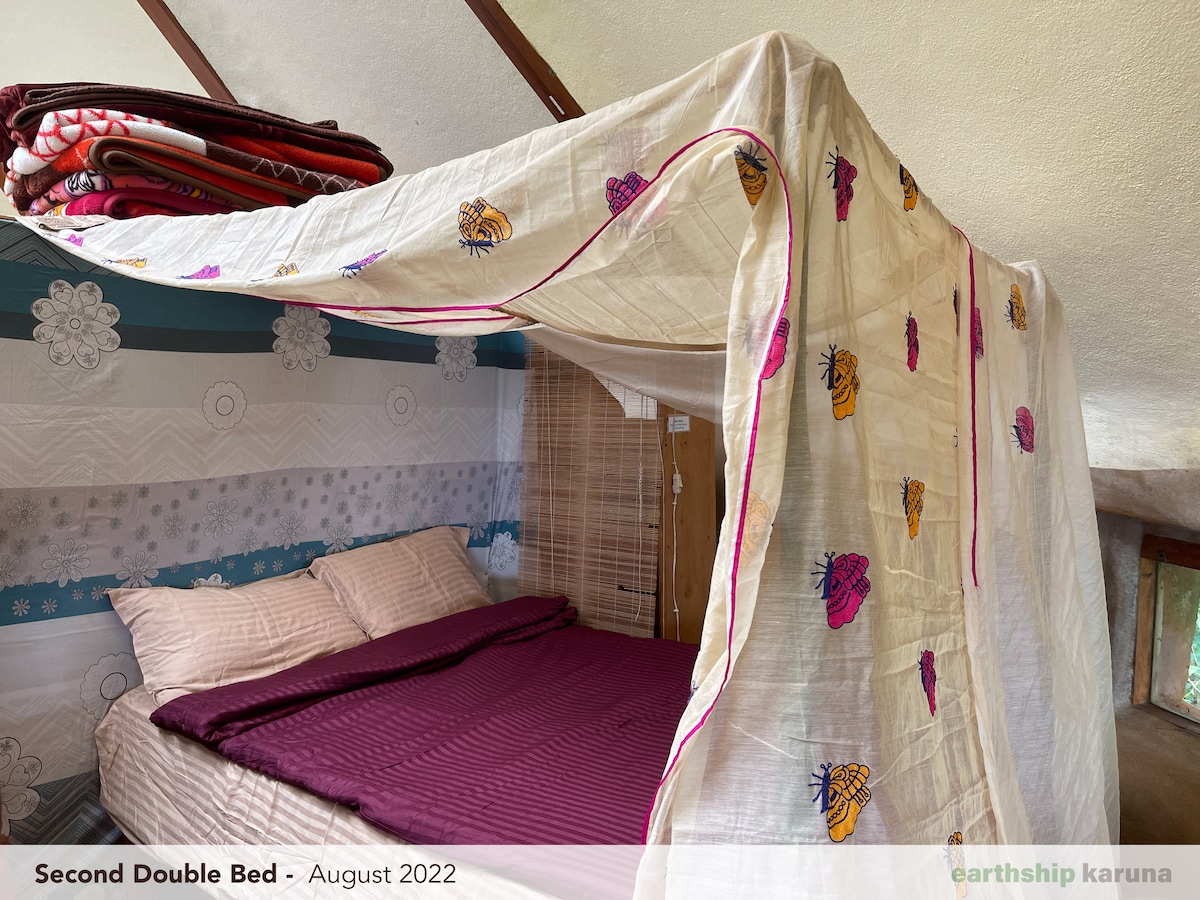
Sleeps up to 4 guests across 2 bedrooms (1 king four-poster, 1 double) with one bathroom.

Stay length

Two-night minimum. Self check-in by keypad. Latest arrival 4:30pm; checkout by 1pm.

Getting in

Final approach by jeep with Satish from Kodaikanal. Safe parking arranged 20 minutes away if you've driven yourself.

Food

Vegetarian only on the land. Bring all your provisions — shops are far. Govinda's Restaurant is a 5-min walk and can deliver dinner.

Mobility

Steep paths throughout. Not suitable for guests with limited mobility. Solo travellers, families and solo women are very welcome.

House rules

No parties. Respect the quiet. The land is shared with other long-term residents and their visitors.

Ready when you are

Stay in Earthship Karuna.

Check live availability and book secure with Airbnb's protection. Direct enquiries also welcome via the host.

Book on Airbnb ★ 4.85